
localized date
Current Time

Each year, millions of dollars from SNAP recipients are drained through skimming across the country. After relying on magnetic strip cards for years, officials in Pennsylvania could spend an estimated $14 million to help make theft less common and accounts more secure.
The move affects the most vulnerable in the state - SNAP, the Supplemental Nutrition Assistance Program, is a federal program that helps low-income households buy food. Benefits are loaded each month onto an Electronic Benefit Transfer, or EBT, card that works much like a debit card at participating stores.
At least 2 million new EBT cards will be issued to beneficiaries with Europay, Mastercard, and Visa — referred to as EMV chip technology. The purpose is to add higher security to minimize theft through skimming devices, which copy card numbers and the user’s PIN, and then drain a recipient’s benefits as early as deposit day.
Stores that accept EBT cards will also be issued with either a new terminal device, software or both.
Anna Sever is the president of Government Solutions for Conduent, the company which processes, distributes and manages EBT programs in 16 states and American Samoa.
Five of those states have transitioned, or are in the process of transitioning, to chip cards, including Oklahoma, Alabama, New Jersey, Virginia, and Pennsylvania.
“If you're going to take food stamps, you have to have new devices,” Sever said. “That's just all there is to it, because the old devices don't have the same level of security.”
All of this was passed through the budget just in time for the state to qualify for a 50% federal reimbursement equaling $7 million. Passed through The One Big Beautiful Bill Act, starting on October 1, the federal government will reimburse just 25% of administrative SNAP costs.
According to Rep. Doyle Heffley (R-Carbon), who co-sponsored the bill, citing data provided by the Office of State Inspector General, more than $15 million in SNAP benefits were stolen through card skimming in the state in 2024.
When a recipient has their benefits stolen, there is no reimbursement process to get those funds back.
“So, people basically end up going a month without food, unless they're going to a food pantry,” said Ann Sanders, director of Public Benefits Policy and Programs for Just Harvest, a nonprofit that aims to reduce hunger in Allegheny County. “Or they're spending money that they needed to spend on other resources such as utility or rent or transportation.”
This can trigger a financial crisis for families, she said, which could cause them to fall behind on bills, have utilities shut off or even face an eviction notice.
Rep. Dan Williams (D-Chester) introduced Bill 2540 to enhance security for EBT cards in May. Since then, language from that bill was introduced through the fiscal code and passed July 12.
“I’d say this moved relatively quickly because it had real bipartisan agreement, and the need for people, particularly within the commonwealth, was great,” Williams said. “Losing precious food resources to criminal fraud is devastating to any family.
It will take six to eight months before chip-enabled EBT cards begin to be mailed out, said Ali Fogarty, communications director for the Pennsylvania Department of Human Services. Distribution and final implementation deadlines for the cards are still being determined, she said
The department is working to finalize transition costs before Oct. 1.
Once that’s done, the new chip-enabled EBT cards will be mailed directly to recipients.
Alabama was the most recent state to finish the transition through Conduent. Its pilot program rolled out last December, and just three months after its success, cards were mailed to recipients in February.
Heffley said budgeting for SNAP security was a “no-brainer.”
“Every bank card you have now has a chip on it,” he said. “So, it's time that the state implement it as well.”
Until then, state officials advise that people can protect their card security by locking the card when not in use, avoiding short, easy-to-guess PIN combinations. And to be aware when new cards arrive in the mail.
“EMV makes it safer, the lock makes it safer, the new device makes it safer, and continuing to battle what the very creative bots can do makes it even more safe,” Sever said. “You know, EMV will make a huge difference. But just as we roll out EMV, I guarantee you those organized crime rings, will try and figure out what the next way is.”
More tips are available through the Office of the Inspector General. Click here for more information.
Cassandra Harris is a reporter with the Pittsburgh Media Partnership newsroom. A spring 2026 graduate of Point Park University, Cassandra interned at the Pittsburgh Magazine, Pittsburgh Latino Magazine and The Homepage Newspaper. In her free time, she enjoys crocheting, spending time with family, and skiing. Reach her at cassandra.harris@pointpark.edu.
The PMP Newsroom is a regional news service that focuses on government and enterprise reporting in southwestern Pennsylvania. Find out more information on foundation and corporate funders here.
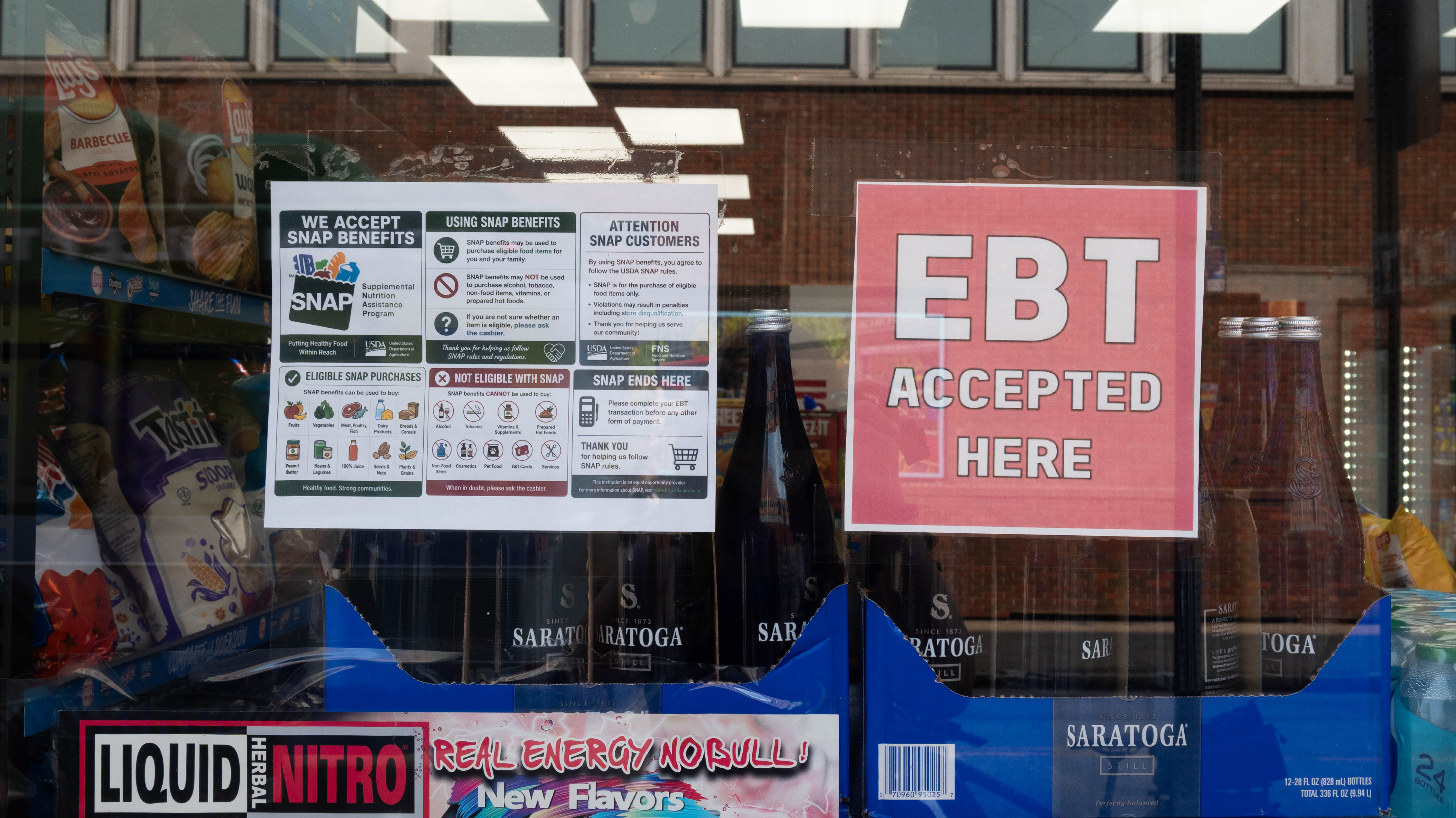
Header image: A sign at a store in Downtown Pittsburgh on Monday, July 27, 2026 indicating the business accepts SNAP cards. State officials are adding increased security to cards to reduce theft of benefits. (Cassandra Harris / PMP Newsroom)



.png)