
localized date
Current Time


As America celebrates its 250th anniversary, residents work to keep the stories of their towns — some more than 200 years old — alive through a patchwork of local historical societies.
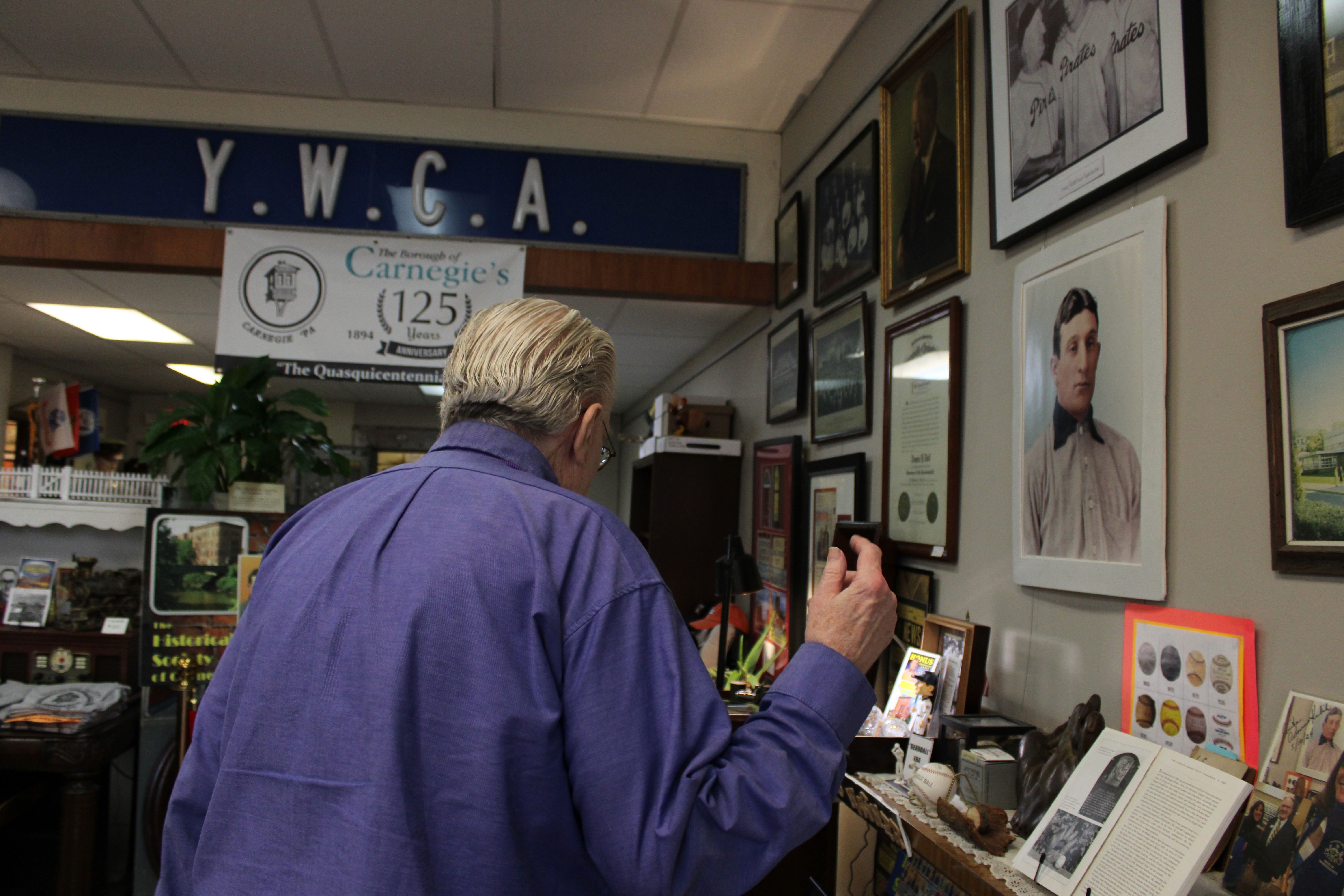
For the volunteers who run these societies, the dramas of the deceased can become immersive: history is not abstract. It is a stagecoach inn where travelers once carried news from Philadelphia and Pittsburgh. It is Honus Wagner’s baseball bat, still handed to visitors in Carnegie. It is the cemetery in Evans City where “Night of the Living Dead” helped invent a new genre of horror.
In towns across southwestern Pennsylvania, local historical societies are working to preserve a record of day-to-day lives: how people traveled, worked, played, gathered, and made meaning in communities shaped by war, industry, sports, migration, and pop culture.
Their collections may be small, their staff smaller, but their mission is expansive — keeping local memory from disappearing.
Theresa Gay Rohall, executive director of the Ligonier Valley Historical Society, said that Compass Inn, a Laughlintown site listed in the National Register of Historic Places, is an important artifact of life in the Ligonier Valley between the American Revolution and the Civil War. The Inn was open from 1799 to 1862, Rohall said.
“We forget how communities are grown today, because most of our communities are already grown,” she said. “The locals could come in and interact with the folks that were traveling from east to west and west to east and learn of the news.”
Local historical societies like Rohall’s are sometimes challenging to staff and fund. Not every community has a Smithsonian, Rohall said. That’s where local historical societies come in.
“We tend to focus so much on national things that we forget that history is being made right around us in our own small communities, in our own small counties,” she said.

Jeffrey Keenan, president of the Historical Society of Carnegie, explains the history of a baseball bat on display with the awe of someone gripping the handle on a time machine.
“Baseball represents — not to sound ‘Field of Dreams’ here — but it represents a different era in time,” he said. “Baseball and boxing ruled Pittsburgh sports up until the ’60s, when football and then hockey got real popular.”
The bat once belonged to Pittsburgh Pirates shortstop Honus Wagner, who retired from the league following the 1917 season. Wagner was a Carnegie local.
Keenan lifts the bat from a long glass case. Rather than shelter the artifact from the public, he hands it to visitors for a swing over home plate.
“Thousands of people have held it,” he said. “It’s been dropped. I’ve been hit by it. We had somebody just so excited they took a swing and cleaned off the shelf behind it, the backswing.”
American preferences began to shift from baseball to football in the 1960s with the arrival of television, among other factors, Keenan explained.
“By the end of the ’50s, almost every American household has a TV,” said Rob Ruck, professor of sports history at the University of Pittsburgh.
“The NFL figured out, before other leagues, how to broadcast its games without destroying the gate, the home attendance. It took Major League Baseball longer to do that.”
Keenan explained the decline of the steel industry happened around the same time that sports in Pittsburgh took off. In 1962 Superior Steel closed its Carnegie operations. Carol Dlugos, the society’s director, said the borough “kind of went downhill then.”
In the 1970s, the city’s sports teams won four Super Bowls, two World Series championships, and one national college football championship. Howard Cosell, a sports commentator, dubbed Pittsburgh the “city of champions.”
“That was a psychological lifeline that stuck to the city,” Ruck said. “I think sport became the story that Pittsburgh used about itself — a story that told itself, but also the world about who Pittsburgh was.”
Natalie Ripper Price, president of the Evans City Historical Society, was a teenager when the 1968 horror film “Night of the Living Dead” was shot in Evans City.
One night, as she sat in a field watching the set, she noticed them using oily rags to create fog. Then a man’s clothes caught fire. He started to run before someone tackled him and put out the flames.
“We’re looking around — where’s the cameras? And there were no cameras, because this was all an accident,” she said.
The historical society helps preserve memories like these, from residents who saw or participated in the filming.
“Night of the Living Dead” is one of Evans City’s best-known cultural touchstones, drawing enthusiasts to filming sites including the graveyard and its chapel. It is an early horror movie, credited on the Library of Congress website for ushering in the zombie film.
Over a decade ago, Gary Streiner led an effort to raise nearly $50,000 to restore the chapel — the only building from the film still standing — after it was nearly demolished, WESA reported.
In the town center, there is now a “Night of the Living Dead” mural, depicting a zombie and a streak of lightning amid scenes from the film. Ripper Price said the commission was her idea.

Hannah Frances Johansson is a reporter for the Pittsburgh Media Partnership newsroom. She holds a master's degree from the UC Berkeley Graduate School of Journalism. Reach her at hannah.johansson@pointpark.edu.

This story is part of a Pittsburgh Media Partnership collaborative reporting project exploring how Southwestern Pennsylvania communities are marking America’s 250th anniversary — and how local history continues to shape civic life today.
The PMP Newsroom is a regional news service that focuses on government and enterprise reporting in southwestern Pennsylvania. Find out more information on foundation and corporate funders here.
Header image: Vic Davidson, volunteer at the Historical Society of Carnegie, gives a tour of the floors above the museum on April 28, 2026. Hannah Frances Johansson/PMP



.png)
.png)