

localized date
Current Time

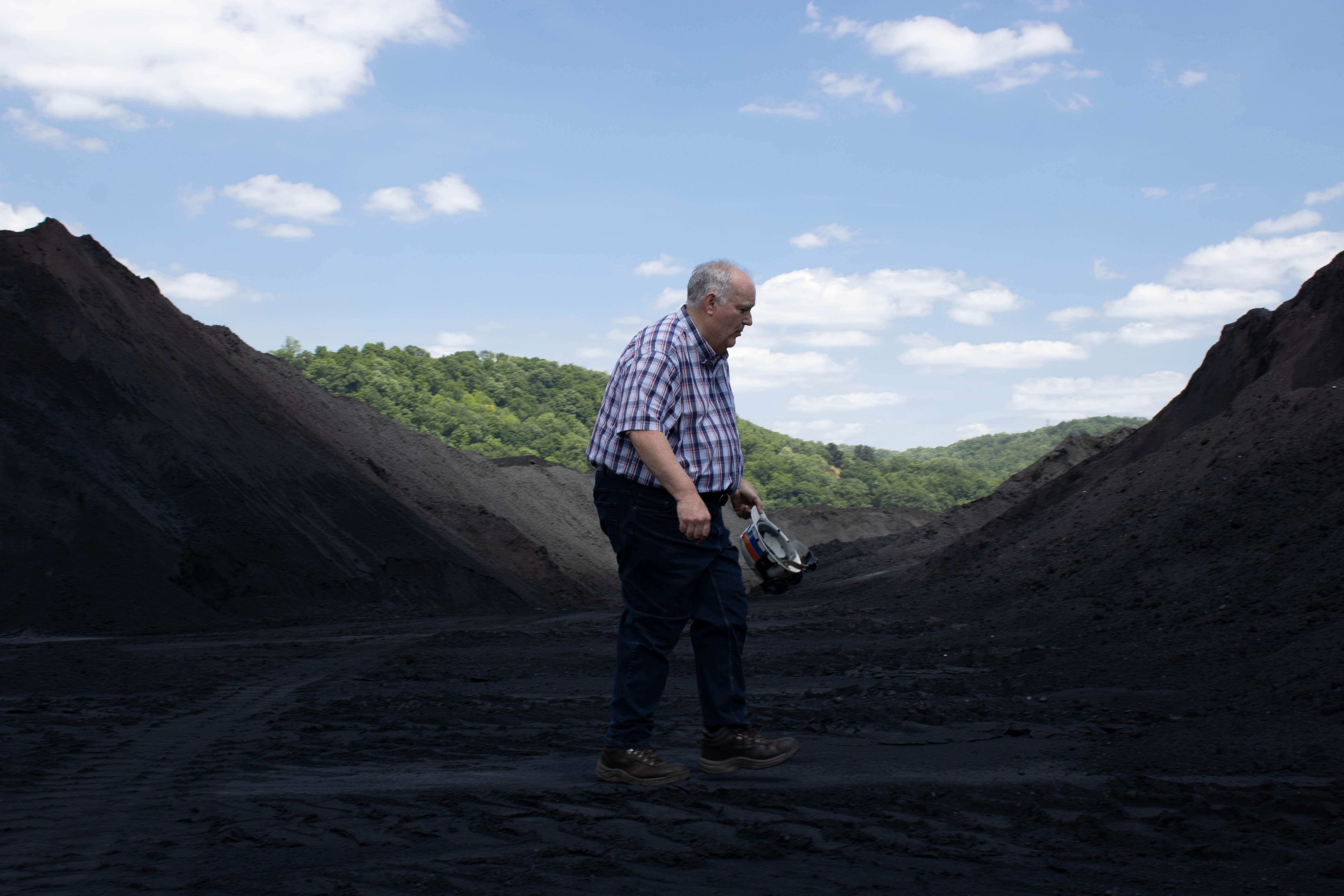
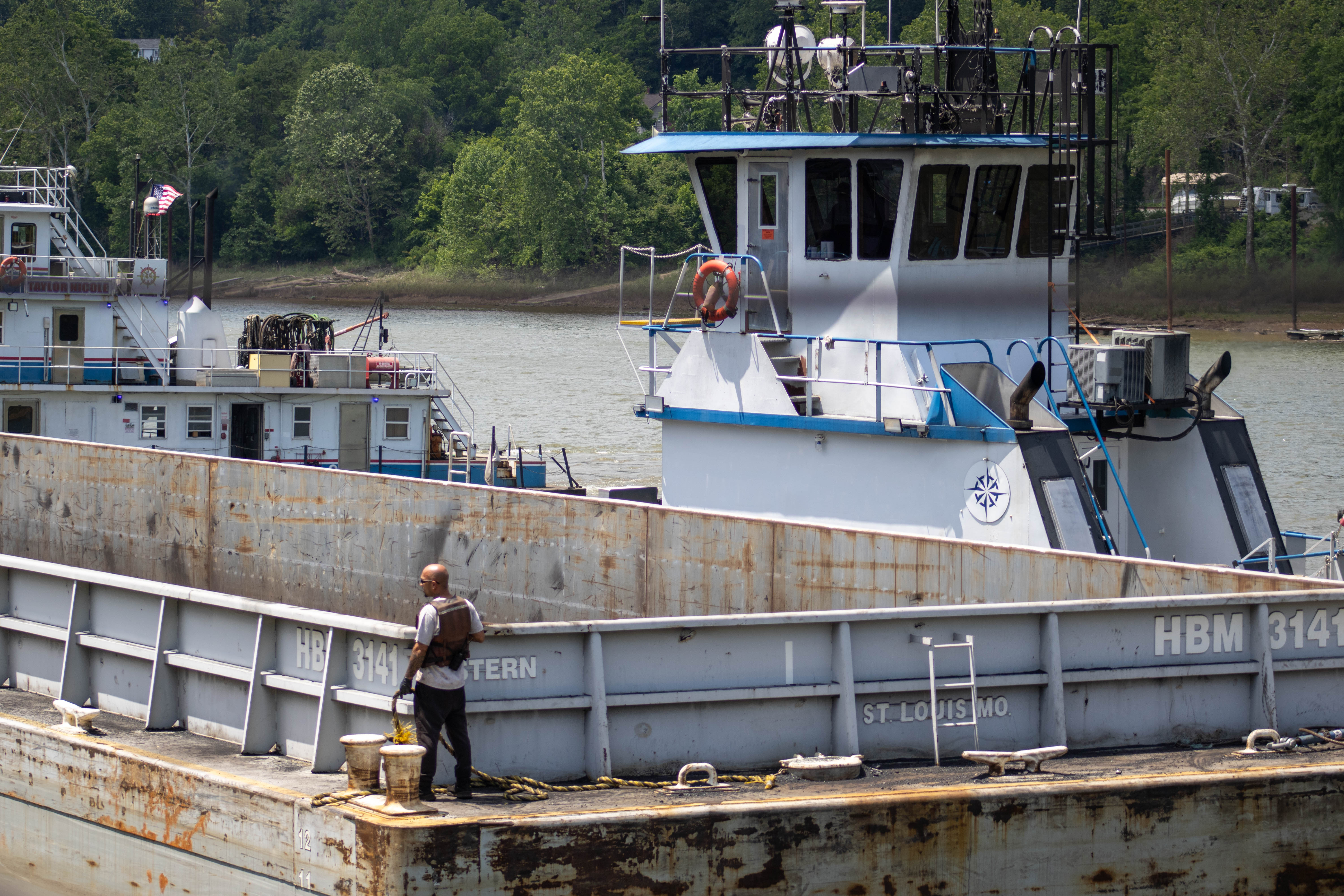
From the shore of the Monongahela River at the Donora River Terminal, site manager John Ross points to several barges, resting on the edge of the riverbank.
“They're on about a 30-degree angle,” he said, “leaning out towards the river.”
The leaning barges represent a challenge facing some businesses along the Monongahela River: After the U.S. Army Corps of Engineers began removing Elizabeth Locks and Dam in July 2024, water levels along an approximately 21-mile stretch dropped more than some businesses expected.
The result is not just a shallower pool, but a narrower river that has exposed more shoreline, Ross said, “It’s just all bone.”
The Army Corps projected that removing Elizabeth Locks and Dam would lower the upstream navigation pool by about 3.2 feet between Elizabeth and Charleroi, creating one continuous pool between Charleroi and Braddock, according to a news release published shortly before the first demolition.
Business owners along the affected stretch say the impact at their facilities feels larger than that single number suggests. They point not only to a lower water surface, but to shallower dock areas, exposed shoreline, silt buildup, and narrower usable access to the river — conditions that have forced some to dredge, reduce barge loads, or move docks into deeper water.
According to Chris Dening, who oversees all major inland navigation projects for the Pittsburgh District of the Army Corps, current water levels are within the expected range.
Matt Pavlosky, assistant executive director at the Port of Pittsburgh Commission, said that roughly a dozen businesses, including river terminals and marinas, have been affected by lower water levels.
The rivers of southwestern Pennsylvania — the Monongahela, Allegheny, and Ohio — serve as vital highways, carrying products across the country. In 2023, regional waterways moved nearly 19 million tons of freight, mostly coal, but also materials including kerosene, limestone, and iron ore.
To transport this material, tugboat captains travel through some of the oldest locks and dams in the country. Elizabeth Locks and Dam, which began operating in 1907, is the second oldest navigation project in the Pittsburgh District.
Like any structure over 100 years old, the dam had structural problems, Dening said.
“Just like a car you drive at home, you reach a certain point when maintenance is no longer a viable option and you got to look at buying a new car,” he said. “In this case, we actually made modifications to the upstream and downstream facilities that removed the necessity for Elizabeth Lock.”
The decision to remove the Elizabeth infrastructure is one piece of the Lower Monongahela River Project, authorized by the Water Resources Development Act in 1992 to modernize the river system.
More than 30 years later, the project is nearly complete, Dening said; work to remove Elizabeth Lock will continue, “at least through 2027.”
Apart from seasonal fluctuations, he does not expect water levels to drop again. “The river is not expected to have any major changes,” he said.
The Army Corps said the project makes the route safer and more efficient to travel, while easing maintenance requirements and cutting costs. “We say there's a $200 million annual net savings to our transportation system,” Dening said.
In preparation for the new river conditions, the Army Corps invested millions to modify shoreline facilities and infrastructure projects, including sewage outfalls and boat launches owned by local governments. It also conducted outreach ahead of the initial demolition.
Since water levels dropped, the Army Corps has dredged the navigation channel and provided permitting assistance to impacted businesses.
Donora River Terminal operates on two levels: an upper level where dunes of powdery coal are mixed into a desired blend, and a lower level where machine operators load and offload material from river barges.
It is a hub for blending and shipping coking coal, a material used in steel production.
When water levels declined, the terminal was forced to make expensive adjustments, Ross said. Operators loaded more barges with lighter loads. The terminal also paid to dredge portions of the river near its dock to prevent boats from getting stuck in the mud. But dredging is not a one-time effort. High-water events can push silt downstream, undoing the work.
“I've spent about $70,000 this year with dredging,” Ross said. “That last water event pretty much put it all right back in where I started.”
Around two years ago, the Donora River Terminal said it received a grant from the Port of Pittsburgh Commission which Ross said they spent in a “matter of months” on dredging. Still, almost half the dock is “unusable.”
Ross and Keith Haselhoff, vice president of business development at the terminal, expect to spend $3.5 million to $4 million by 2029 adapting to the new river conditions, including more dredging and machinery replacement.
Moving forward, leaders at the Commission hope to secure a larger grant from the U.S. Department of Transportation Maritime Administration’s Port Infrastructure Development Program to help businesses cover costs. The Commission said the grant would fund additional dredging outside the navigation channel maintained by the Army Corps.
Gary Sloan has owned Carousel Marina in Bunola for more than 40 years. When water levels dropped, boats became stuck on the mud at their dock spaces. He said he pulled them out with a come-along, a type of crank, and ropes.
Since then, Sloan estimates that he’s lost a third of his business.
“A lot of people left when the water was low because they couldn’t float their boats,” he said. “Several didn’t come back.”
To reach the water at Carousel, visitors cross over the newly exposed shoreline, where plants sprout from between cracks in the drying mud.
For marina owners like Sloan, assistance from the Army Corps or the Port of Pittsburgh Commission is unlikely. As privately owned recreational facilities, marinas fall outside the purview of both organizations.
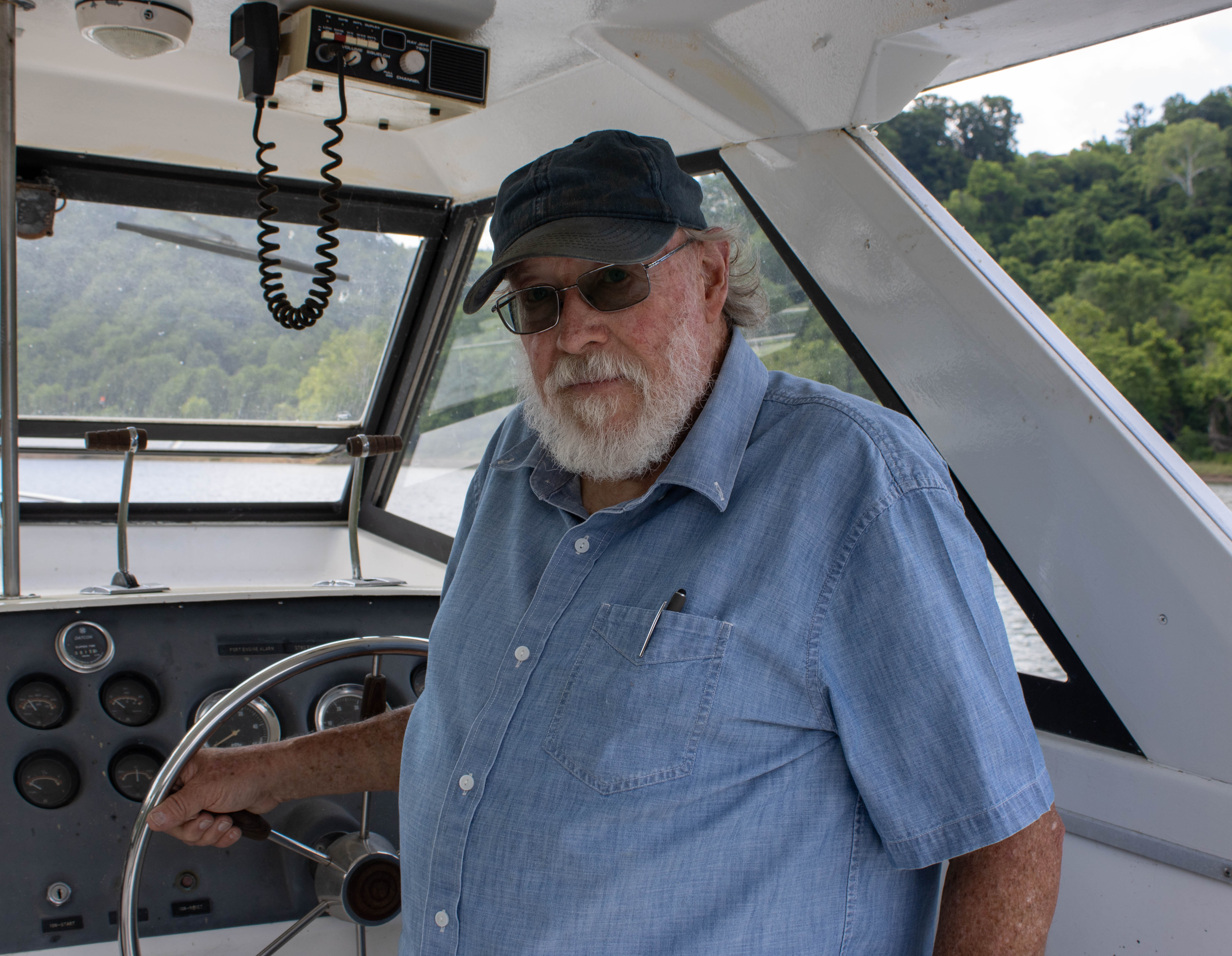
Hannah Frances Johansson is a reporter for the Pittsburgh Media Partnership newsroom. She holds a master's degree from the UC Berkeley Graduate School of Journalism. Reach her at hannah.johansson@pointpark.edu.
Riona Duncan contributed reporting to this story. She is a summer intern for the Pittsburgh Media Partnership Newsroom, and a senior at Carnegie Mellon University. You can reach her at riona.duncan@pointpark.edu.
The PMP Newsroom is a regional news service that focuses on government and enterprise reporting in southwestern Pennsylvania. Find out more information on foundation and corporate funders here.
Header image: John Ross, site manager at the Donora River Terminal, walks among piles of coking coal on June 5, 2026. Hannah Frances Johansson/Pittsburgh Media Partnership Newsroom



.png)



.jpg)