
localized date
Current Time

.png)
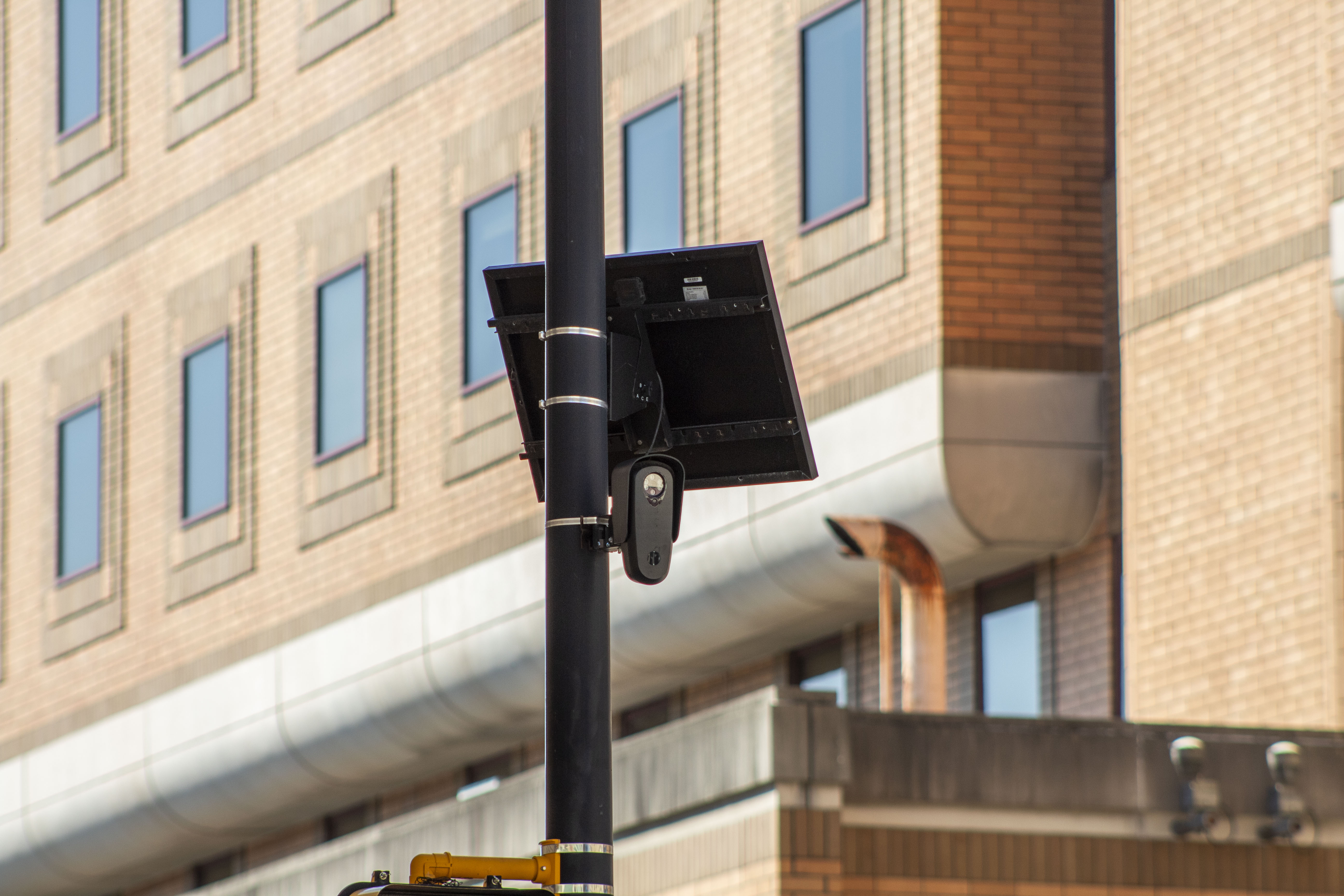
Flock cameras have become a symbol of a growing national fight over surveillance. While Pittsburgh officials say they don’t use Flock, the city does use other cameras that function similarly.
Pittsburgh has used automatic license plate readers, or ALPRs, since 2006, according to Daniel Shak, manager at the office of Public Safety Technology. The City of Pittsburgh does not contract with Flock but uses other brands of ALPRs, including Axis, Hanwha, and Bosch, he said.
The cameras automatically capture images of a car license plate. Such cameras can also capture a car’s make, model, color, and a timestamp.
The cameras used by the city are controlled through the Real Time Crime Center, a hub at police headquarters that houses crime surveillance technology. Camera footage and data are generally retained for 10 days, unless preserved as part of an investigation.
The Pittsburgh Bureau of Police follows Order 69-02, which permits camera use for public emergencies, law enforcement and crime prevention.
Shak said the safeguards are in place to prevent any potential abuses of power by law enforcement.
“We have no misuses that are on record,” Shak said. “We looked at other cities; we created a policy and a plan that best fits Pittsburgh. Pittsburgh is made of a lot of demographics, different neighborhoods, different needs, and putting that specialized attention to those communities along with policy-driven technology deployments has allowed us to kind of stay ahead of that curve and ensure that there is not misuse.”
District 7 Councilwoman Deborah Gross sponsored a resolution prompting the Department of Innovation & Performance to create a report on all surveillance technology used by the City of Pittsburgh. The report, released Sept. 9, identified 37 types of technology.
“I think we all need to learn more about this. I am definitely absolutely concerned as a person and as a representative of citizens of Pittsburgh, that there is way too much technology that has crossed over the line and is available to bad actors in the marketplace that invades your privacy and is surveilling you, and I don’t think it should be,” Gross said.
The report details that cameras are posted in locations where there is no legal expectation of privacy.
ALPR cameras have been identified throughout Southwestern Pennsylvania. In April, Munhall residents created a petition calling for a ban on Flock cameras after borough officials started a trial run with the company. Deflock.org – an anti-ALPR open-source map – has Flock cameras marked in Mercer, Lawrence, Washington, and Clearfield counties, among others.
While there are Flock cameras in and around the City of Pittsburgh, they are privately owned. Businesses like Home Depot and Lowe’s contract with the company, and customers may see Flock cameras in their parking lots. Home Depot did not respond to a request for an interview.
As ALPR use has expanded across the U.S., the technology has raised concerns about privacy and misuse. An investigation by the Washington Post documented some instances of law enforcement officers using license plate reader systems to track current and former romantic partners, for example.
There have also been documented false ALPR matches, broad data sharing, and concerns about the continuous collection of vehicle-location data. Pennsylvania lawmakers have introduced multiple bills suggesting limitations on ALPR cameras.
In response to concerns about misuse, Flock announced in August that it would reduce the default data retention period from 30 days to seven. The company also launched its audit assist feature, which is said to flag abnormal footage activity for administrator review.
Flock says on its website the technology helps law enforcement solve crimes by capturing a record of events. The public safety technology company sells license plate readers, video cameras, gunshot and audio detection devices, among other products. Flock Safety officials in an email said no one was available for an interview.
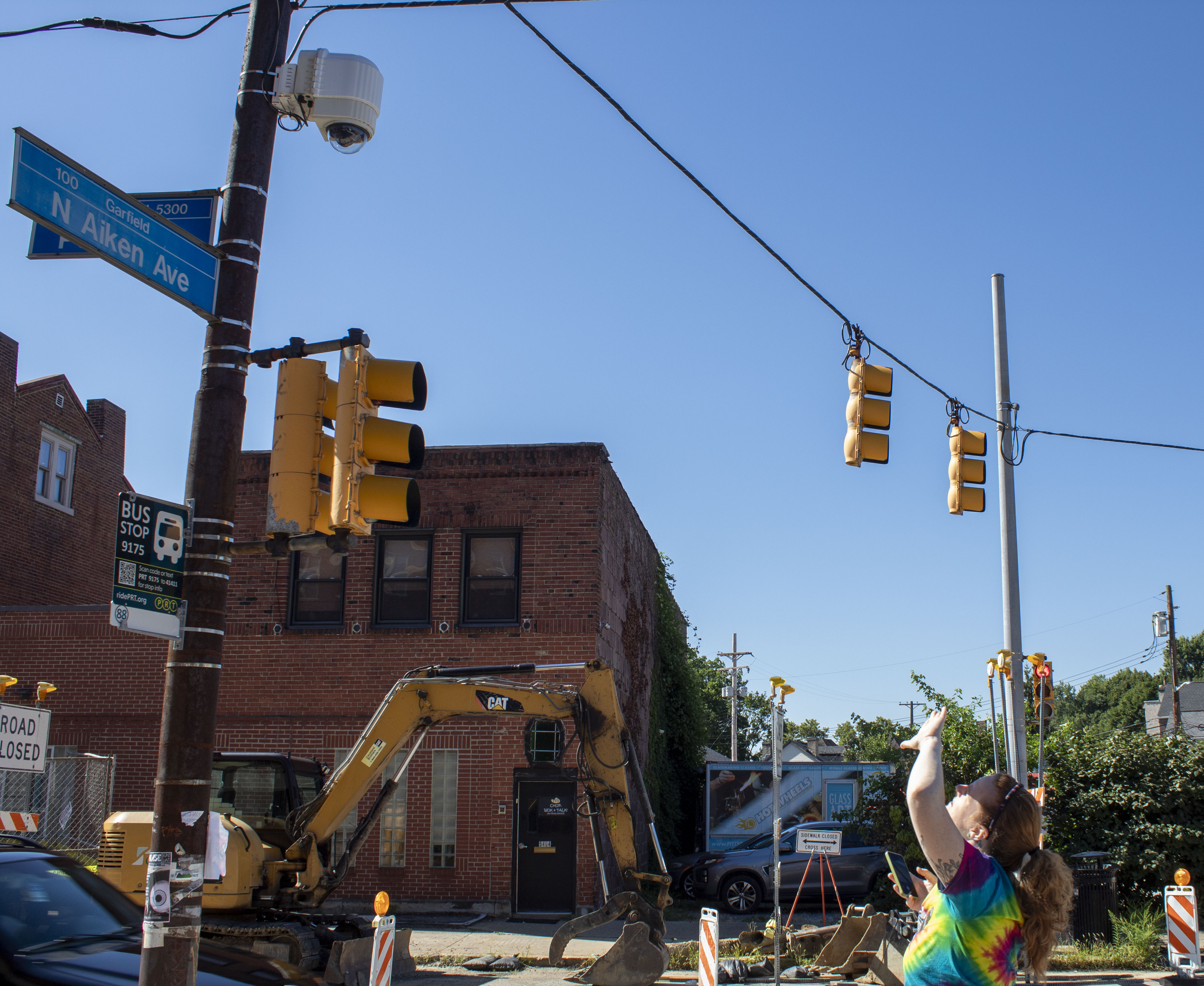
Aerin Adams-Fuchs, co-owner of the Soft Spot Café in Garfield, was recently made aware of a camera installed at the intersection of North Aiken and Penn avenues, in front of her business. The café is a space that welcomes queer, trans, and other people from historically marginalized communities.
“There is an immediate concern from the aspect of the people that we are asking to come, because we're not just a local community coffee shop that's attracting the people that live in the neighborhood. We're specifically doing outreach to queer and trans youth and families and people that have been disenfranchised in other parts of their life and asking them to come here,” Adams-Fuchs said.
The camera outside of the Soft Spot Café is labelled as an Axis camera on Deflock.org, Shak confirmed.
While the city does not provide third parties with direct access to camera footage, they may make a request through the Real Time Crime Center to gain access for an active investigation, Shak said. A case number must be included in the request.
ALPR systems have drawn criticism because federal immigration agencies have obtained access to license-plate data, including through local law enforcement partners. Some ALPR vendors also contract directly with Immigration and Customs Enforcement. Shak said that the city has not provided ICE with footage in the last 18 months.
“We can't obviously say who or what would make a request of us. Most of the requests that we get from municipal entities are for a homicide investigation,” Shak said. “But I mean, I can't say if ICE is going to call us tomorrow and ask us for something.”
While Flock has been at the forefront of public discussion, other cameras providers have similar relationships with ICE, according to Chad Marlow, ACLU senior policy counsel.
“There are certainly aspects of other ALPR companies that are worse than Flock. Flock does not, in fact, have direct contracts with ICE. Other ALPR companies do,” Marlow said.
The Flock Safety website states that ALPRs track vehicles, not people.
The Deflock.org map tags ALPR cameras across the nation, but because it is community-run, not all cameras are marked correctly, Shak said.
“There is also a false presence that this ‘Deflock my community’ social media that’s out there. They have literally labeled every camera in a community,” Shak said.
At the time of publication, most entries in and around Pittsburgh are labeled as Plate Smart, Motorola Solutions, and Flock Safety products on the crowdsourced map.
In Pittsburgh, police officers are not permitted to use pan, tilt, or zoom features to follow individuals without reasonable suspicion.
Other prohibited uses include, but are not limited to, monitoring individuals solely on the basis of characteristics like race, age, sex, or sexual orientation; monitoring free speech activity except to assist with traffic or emergency services; and providing footage to other governmental entities without a formal request.
Adams-Fuchs said security cameras won’t prevent her from hosting marginalized groups, but she would look into other spaces if necessary. For now, she is working to raise community awareness.
“I think the goal is to get a better idea right now of what the scope of its monitoring is, and then hopefully be able to communicate that in a way on our website, on the poles around town, so that people can choose their comfortability,” Adams-Fuchs said.
Adams-Fuchs contacted the city and was informed that the camera was previously installed for crime reduction purposes.
In Oakland, a Flock camera is mounted at the intersection of Forbes Avenue and Atwood Street. Shak said the camera is privately owned.
Marlow said that concerned citizens should stay aware of cameras in their communities.
“I think when people are out there opposing Flock, that is 100% the right thing to do in the first instance, but once you get rid of Flock, if your local city or town switches over to another ALPR company, you may find yourself in virtually the same circumstances as you were under with Flock,” Marlow said.
Sarah Naccarato is an intern for the Pittsburgh Media Partnership and a senior at Chatham University. She is a one of 19 New York Times Corps mentees in the U.S., and a staff member of the Chatham Communiqué. In 2025, Sarah spent one month in Arles, France as a part of the ieiMedia international journalism and photography Arles project.
The PMP Newsroom is a regional news service that focuses on government and enterprise reporting in southwestern Pennsylvania. Find out more information on foundation and corporate funders here.
Header image: An automatic license plate reader in the City of Pittsburgh. Some cameras are controlled through the city’s Real Time Crime Center, while others are privately owned. Sarah Naccarato / PMP Newsroom